
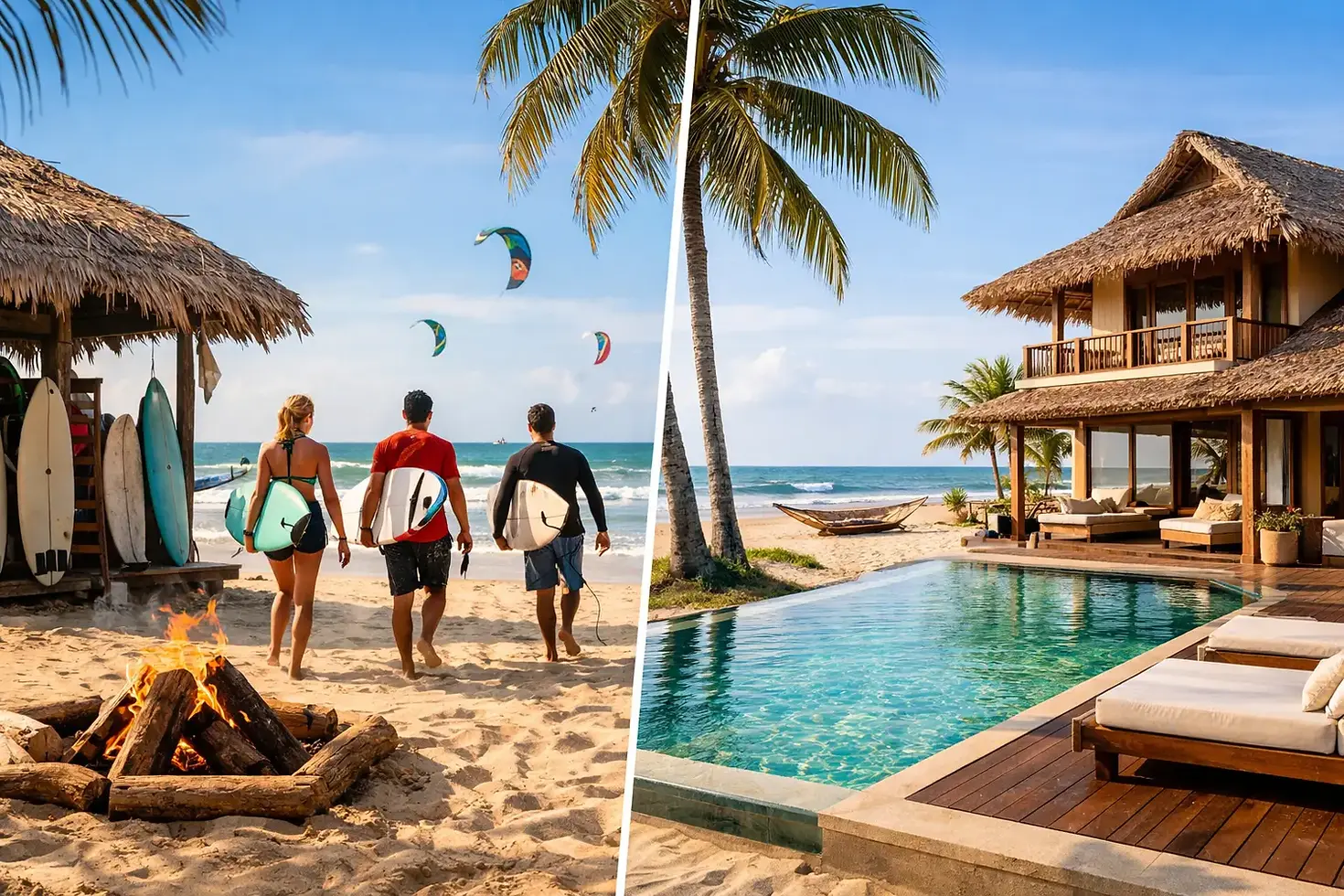
Surf Camp vs Beach House: Which Fits Best?

You can usually feel the difference before you even book. A surf camp promises structure, instant community and a ready-made plan. A beach house suggests slower mornings, more privacy and the freedom to shape the trip around your own rhythm. If you are weighing up surf camp vs beach house, the right choice is less about what sounds exciting online and more about how you actually want to spend your days by the sea.
For some travellers, that means lessons, set meal times and a social crowd. For others, it means waking up to the beach, deciding on the spot whether to surf, kitesurf, paddle out, nap by the pool or gather everyone for a long lunch on the terrace. Both styles can work brilliantly. They simply suit different people, different group dynamics and different kinds of holiday.
Surf camp vs beach house: the core difference
At heart, a surf camp is built around the sport. Your accommodation, coaching, transport and often your meals are wrapped into one experience. That can be ideal if you are new to surfing, travelling solo, or keen to improve quickly without having to plan the details yourself.
A beach house is built around the stay first, with the sport added in a more flexible way. You have your own space, more room to spread out and a holiday that can include surf sessions without every part of the day revolving around a fixed schedule. For couples, families and groups, that distinction matters more than people often expect.
The difference is not that one is active and the other is lazy. A beach house can be full of early starts, lessons, downwinders and sunset sessions. The real contrast is control. In a camp, much of the framework is already decided. In a house, you can shape the week around your energy, the conditions and the people you are travelling with.
When a surf camp makes more sense
If you are starting from scratch, a surf camp can be a very smart choice. There is comfort in arriving somewhere and knowing that boards, instructors, transport and the general plan are already lined up. You do not need to figure out where to go, when the tide works, or whether you have packed the wrong gear. You can just arrive and get going.
That same structure also helps solo travellers. Camps are naturally social. You will usually eat with other guests, head to the beach together and have people around to share the day with afterwards. If meeting others is a big part of the trip, that environment can feel easy and fun rather than forced.
There is also the progression factor. With regular coaching and a set routine, many people improve faster in a camp setting than they would on a loose, self-directed holiday. If your main goal is to build confidence, fix technique or spend as many hours in the water as possible, the camp model can be very effective.
The trade-off is that camps do not always leave much room for the rest of holiday life. If one person in your group wants to surf all day but another wants a slow breakfast, a quiet swim and a massage in the afternoon, a fixed schedule can start to feel limiting.
When a beach house is the better fit
A beach house tends to suit travellers who want the sea close, but not at the expense of comfort or freedom. That might be a family with mixed interests, a group of friends with different levels in the water, or a couple who want active days without giving up the feeling of a proper beach break.
Space changes the experience. Instead of one room and shared common areas, you have places to gather and places to disappear for an hour with a book. You can make coffee when you like, come back salty from a session and stretch out by the pool, or sit together over breakfast before deciding what the wind and waves are doing.
This is especially valuable in destinations where conditions vary through the day. In Taiba, for example, some travellers come for surfing, others for kitesurfing, and many want a bit of both depending on the season. From December to March, wind and wave can combine beautifully for kitewave, surfing and SUP. From January to March, the surf season gets extra energy with Brazilian and local championships. In a beach house setup, you can adapt without feeling locked into one formula.
For groups, cost can work in your favour too. A camp may look simple when priced per person, but the total can climb quickly once you add private rooms, extra lessons, gear hire or anything outside the package. A house often gives better value when several people share, especially if not everyone wants the exact same itinerary.
Surf camp vs beach house for different types of traveller
The beginner travelling alone may still be best served by a surf camp, especially if confidence and social connection are top priorities. There is real value in having guidance built into the day and people around you at a similar stage.
A couple usually has a more nuanced choice. If both of you want constant coaching and a social setup, a camp can work well. But if one of you rides and the other simply loves being by the sea, a beach house often feels more balanced. Nobody has to spend the week following someone else’s timetable.
Families nearly always benefit from flexibility. Children, teens and adults rarely want the same pace all day long. A house gives everyone more breathing room, and it is far easier to combine lessons, downtime, shared meals and proper rest.
Groups of friends are where the beach house often shines. One person can head out for the dawn surf, another can take a lesson later, and someone else can stay back with a coffee on the terrace and still feel part of the trip. The holiday becomes more personal without falling apart.
Coaching, gear and support do not have to belong only to camps
One reason people lean towards a surf camp is the assumption that a beach house means organising everything yourself. That is not always true. In the right place, you can stay in a private house and still have lessons, rentals, repairs, local guidance and day planning handled for you.
That hybrid approach suits many travellers better than a classic camp model. You keep the comfort and independence of a beach house, but still get the practical support that makes a sport-focused trip run smoothly. That is particularly useful for kite and surf holidays, where wind windows, spot choice and equipment logistics can shape the whole day.
At Kite & Sol Beach House, that is exactly how many guests prefer to do it. The house gives you beachfront space, room for up to 12 guests, a pool, terrace and direct access to the sea, while local sport support can still be arranged through an experienced partner for lessons, rentals, trips and repairs. It feels less like being processed through a package and more like having the right help exactly when you need it.
The lifestyle question matters more than the label
People often compare surf camp and beach house as if one is serious and the other indulgent. In reality, the better question is how you want the trip to feel when you are not in the water.
Do you want shared dinners with new people every night, or do you want the option of a quiet evening with your own group? Do you like the momentum of a fixed plan, or does that start to feel like work after a day or two? Are you travelling for sport first, or for a beach holiday with sport woven through it?
There is no universally better option. The right answer depends on your experience level, your group, your budget and how much independence you enjoy. Even your season matters. A short solo trip to improve technique may suit a camp perfectly. A week with family or friends, especially somewhere with reliable wind, waves and room to breathe, may be far better in a house.
If you are still unsure, imagine day three rather than day one. Day one is all excitement. Day three tells the truth. By then, would you rather have someone else setting the pace, or would you rather wake up, look at the sea and choose your own version of a great day? That answer usually points you in the right direction.


Comments