
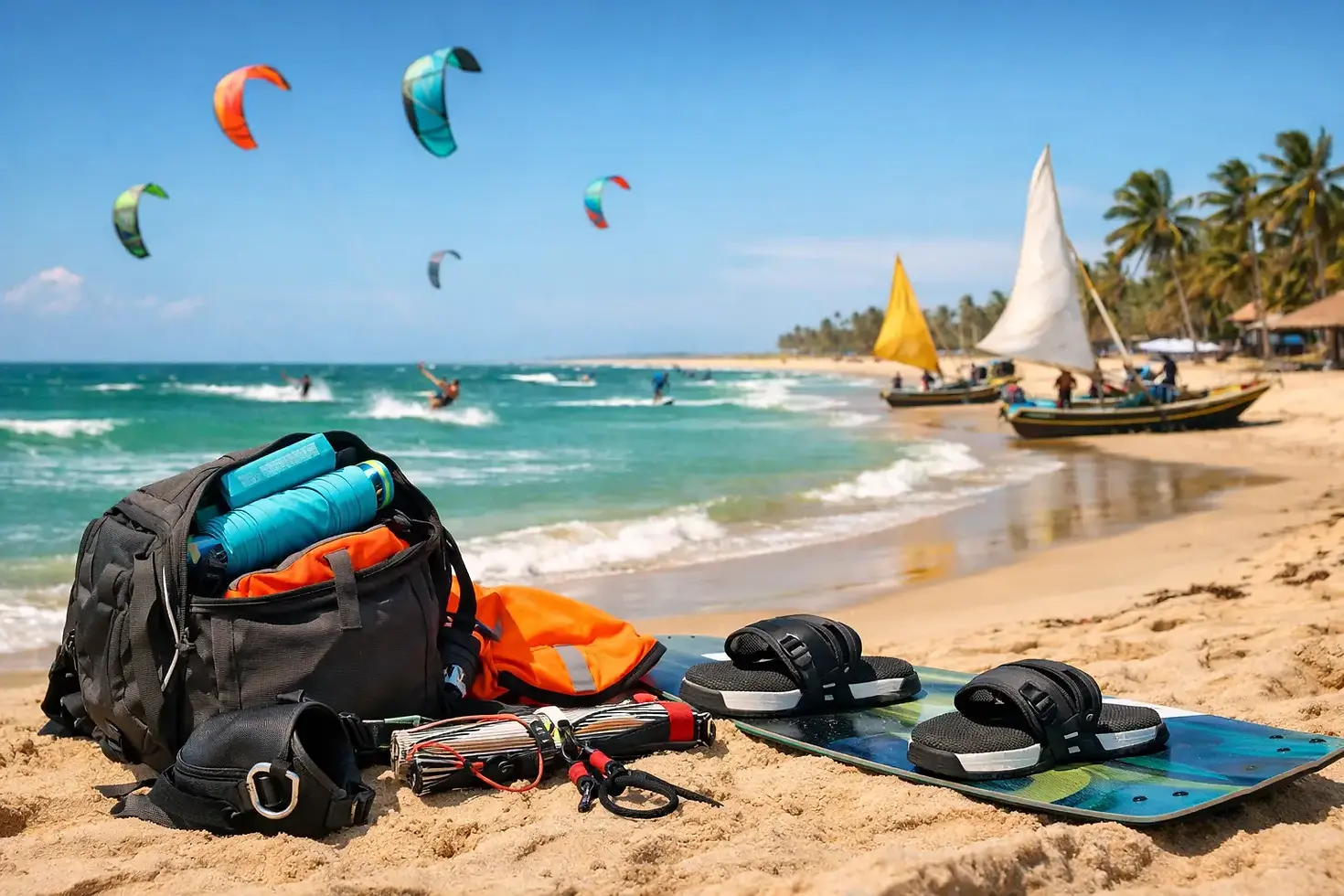
What to Pack for Kite Holidays
- John Groszek
- Jun 15
- 6 min read

Nothing spoils the first windy afternoon faster than realising your pump hose is missing, your sun cream leaked through your bag, or you packed for a city break instead of a week on the water. If you are wondering what to pack for kite holidays, the best approach is simple: pack for wind, sun, salt, travel wear and a lot of time barefoot.
A good kite trip packing list is not about bringing everything you own. It is about bringing the right things for the conditions, your riding level and the kind of stay you actually want. Some travellers arrive with three board bags and no decent rash vest. Others bring only the basics and end up borrowing half their setup. The sweet spot sits somewhere in the middle.
What to pack for kite holidays without overpacking
The first thing to decide is whether your destination is a bring-your-own-gear trip or a lighter travel setup with lessons, rental or local support. That changes everything. If you are an experienced rider who knows exactly what board and kite sizes you like, you may prefer to travel with your own equipment. If you are a beginner, or heading somewhere with easy rental and repair support, packing lighter can make the whole journey much easier.
Airline baggage rules matter as much as wind forecasts. A cheap flight can become expensive once you add sports luggage, and not every route handles board bags kindly. If you are travelling as a couple, family or group, it can make sense to share pumps, tools, sunscreen and first-aid basics rather than doubling up on everything.
Your core kitesurf gear
If you are bringing your own setup, start with the obvious essentials: kites, bar, harness, board, pump, leash if you use one, fins, screws and a repair kit. That sounds straightforward, but small parts are where people get caught out. Pack spare fin screws, pigtails, valve patches and any odd little bits that are hard to replace quickly.
Think about your destination rather than your full home quiver. For a windy trip, you probably do not need every kite you own. Bring the sizes you are most likely to use, with one smaller or larger option depending on the season and your weight. Travelling with fewer, smarter choices keeps your luggage simpler and your stress levels lower.
A compact tool kit helps more than people expect. You do not need a workshop in your bag, just the basics to tighten, patch or adjust equipment after a few hard sessions. Salt, sand and repeated use can turn minor issues into lost water time if you are not prepared.
Clothing that works around the beach
Most people underpack practical beach clothing and overpack evening outfits they never wear. On kite holidays, you will spend a lot of time in swimwear, loose shirts, light shorts and quick-drying layers. Bring clothing you can throw on after a session without thinking too hard about it.
Long-sleeved UV tops are worth the space. Even if you usually ride in just board shorts or a bikini, long sun exposure adds up quickly, especially with wind and water reflecting the light back at you. A rash vest or lightweight sun top can save your skin and make longer sessions more comfortable.
You will also want at least one warmer layer for early mornings, breezy evenings or post-session fatigue. Tropical destinations can still feel cool after hours in the water. A light hoodie or sweatshirt usually does the job.
Flip-flops are fine around the house and beach, but pack one pair of proper sandals or trainers too. They help for airport days, local exploring and any trip where bare feet stop feeling charming.
What to pack for kite holidays in strong sun and salty conditions
Sun and salt shape almost every part of a kite trip, and this is where smart packing really pays off. Good sun cream is essential, and more than one traveller has learned too late that buying it locally at the last minute can be expensive or limited. Bring a reef-conscious, high-SPF option that you know your skin tolerates.
A hat, polarised sunglasses and lip balm with SPF are easy wins. So is aftersun or a simple moisturiser. Even confident sun-seekers tend to underestimate how much exposure they get between rigging, riding, spectating and walking back and forth along the beach.
Dry bags are another underrated item. One small waterproof bag keeps your mobile phone, keys and wallet safe when you are moving between the beach and your room. A larger one is useful for damp swimwear, waxy sun cream bottles or separating sandy kit from clean clothes.
Microfibre towels work well because they dry quickly and take up less space. If you are staying somewhere with beach towels available, you may not need one, but a compact spare is still handy for downwinders, day trips or that inevitable moment when everything else is wet.
Health and comfort items people forget
The most useful non-kite items are often the least glamorous. A small first-aid kit, plasters, antiseptic cream, pain relief and any personal medication should be packed before anything else. Cuts from shells, blisters from straps and general travel niggles are all easier to handle if you have the basics close by.
Ear plugs can be helpful if you are a light sleeper sharing a house with early-rising kiters. Rehydration tablets are also worth having, especially in hot, windy places where you spend hours in the sun and do not notice how much fluid you are losing.
If you are prone to muscle tightness after long sessions, pack whatever genuinely helps you recover, whether that is magnesium, a massage ball or simple stretching bands. The goal is not to turn your luggage into a clinic, just to avoid losing good wind days because your body is complaining.
Documents, money and travel admin
This is the dull part, but it matters. Keep passports, travel insurance details, flight confirmations and any sports baggage paperwork easy to reach. If your insurance has specific wording for kitesurfing, check it before you fly rather than after something goes wrong.
Bring one bank card separate from your main wallet and keep a little local cash for small purchases, transfers or beach stops where cards may not be convenient. A waterproof mobile phone pouch is useful if you want to keep your mobile phone nearby without constantly worrying about sand and spray.
Chargers, plug adaptors and a power bank are easy to forget when all your attention is on kites and boards. If you use a watch, action camera or tracking device, pack those charging cables too. They are the sort of tiny items that are annoying to replace on holiday.
Packing for beginners, families and groups
Not every kite holiday looks the same, and your packing should match the trip. Beginners usually need less equipment and more comfort. If you are taking lessons, your focus should be practical swimwear, sun protection, easy beach clothes and anything that helps you stay relaxed between sessions.
Families tend to need better organisation rather than more gear. Shared sunscreen, labelled dry bags, plenty of water bottles and simple snacks can make beach days much smoother. If you are travelling with children, add shade-friendly clothing and spare swimwear because wet kit seems to multiply fast.
Groups often benefit from agreeing in advance who is bringing what. One person can carry a pump, another a repair kit, another the speaker or first-aid basics. It saves space and avoids six versions of the same item turning up while nobody remembers the thing you actually needed.
A few things you can leave at home
You probably do not need your full toiletries cupboard, multiple pairs of jeans, formal clothes or five evening outfits. Kite destinations are usually relaxed, and after a full day in the wind most people want comfortable food, a shower and an early night rather than a fashion show.
Heavy books, bulky hair tools and too many shoes also tend to travel badly. If an item does not help you ride, recover, stay comfortable or enjoy the beach, question whether it deserves space in your bag.
If you are staying somewhere with support nearby, you can also be more selective. At places such as Kite & Sol Beach House, where guests can combine accommodation with lessons, rentals, repairs and local advice, there is less pressure to arrive carrying your entire world.
The best packing list is the one that leaves you feeling ready, not overloaded. Bring the gear that makes your sessions easy, the clothing that keeps you comfortable, and the small essentials that stop silly problems becoming big ones. Then leave a bit of room in your bag for the things every good kite trip should bring back with it - salt, sand and plans for the next one.


Comments